Buying advice · 15 min · By Vehilo ·
Buying a demonstrator car in Germany
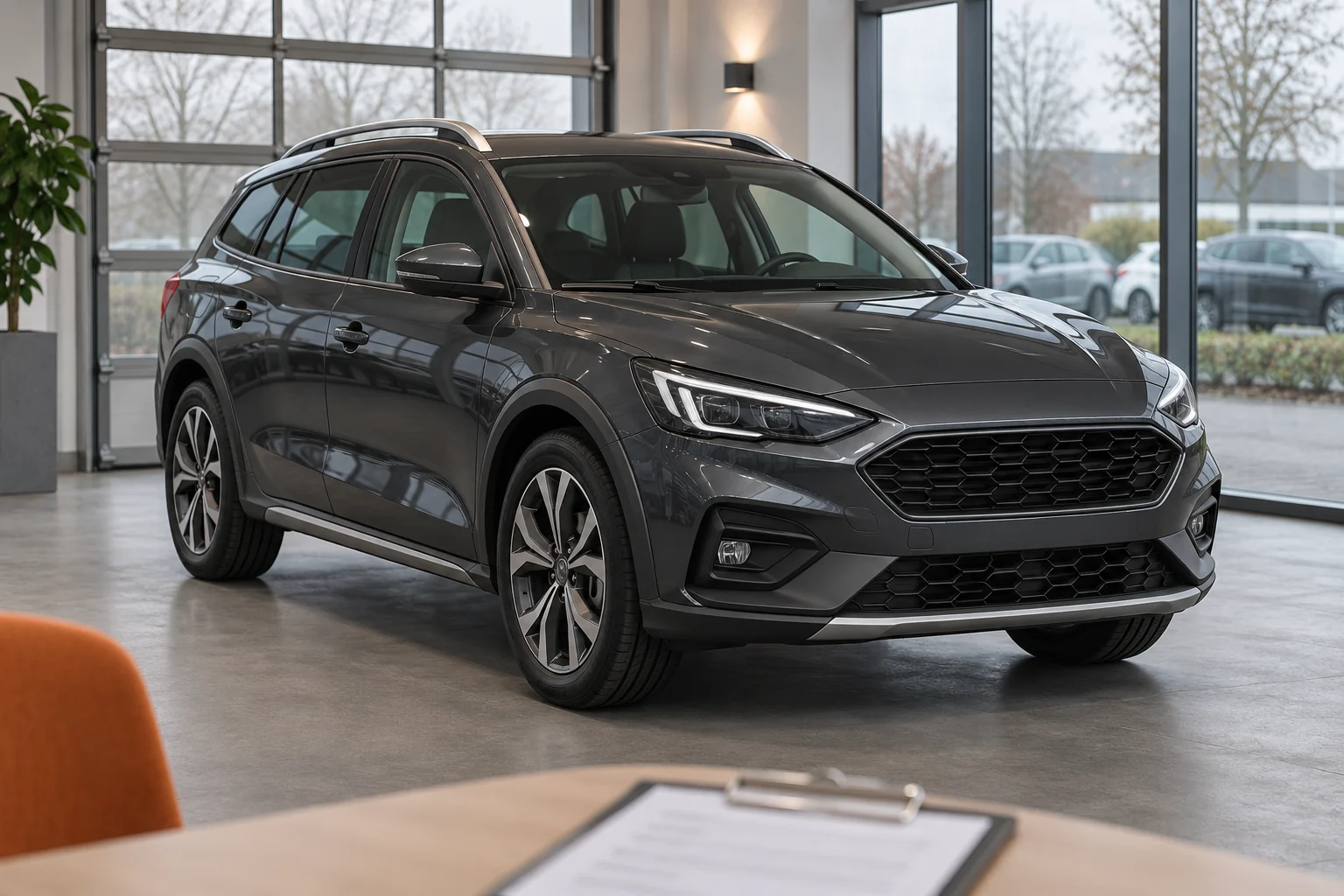
The dealer has a demonstrator you could collect soon. The advert shows a sizeable discount, but the gap narrows when you put a written quote for an equivalent new car alongside it. Then you have questions about the actual car. Will it come on its current tyres? When did the manufacturer's warranty begin? How much more will the dealer drive it before handover?
A demonstrator can be worth buying if it has the equipment you need, the price still makes sense after known immediate costs, and you have enough evidence about how it was used and what you will receive. Start with two specific quotes. Use the same worksheet for both, with a separate place for anything that still needs an answer.
Put both quotes on the same basis
Ask for a written offer that identifies the exact demonstrator. Ask for a new-car quote for an identified stock car or a specification the dealer can order. Check the model generation or revision, powertrain, engine or motor version, transmission and body style. Two cars with similar names can come with different equipment packages. Keep the quote number or exact specification so you can trace the version you compared when the dealer updates a price.
Write down the equipment you actually need before comparing the extras. If you regularly tow a trailer, check which version is suitable and ask for the specifications relevant to how you will use it. If you park in a tight space every day, decide whether a reversing camera is enough or whether you also need front sensors. For an electric car, the available charging options may affect whether it fits your regular routes or parking arrangements. Ask the dealer to show your required features on the car and in the equipment list. Treat the package name in the advert as a starting point for the conversation.
A missing requirement may end the comparison. If you would consider a retrofit, find out whether the exact car can take it, when the work could be completed and who would pay. A written estimate with a clear description gives you something you can compare. If compatibility or cost remains unknown, leave that requirement open in your worksheet. Extras you would never have bought for your own use need no price in your calculation.
Ask for the total cash price including VAT for both cars. Compare the same handover arrangements, including the same choice of collection or delivery where possible. If the dealer charges separately for an obligatory delivery, preparation or registration item, put it on the appropriate side of the comparison. Give any finance or part-exchange incentive its own row, with the condition attached. For the cash comparison, use the prices available without those conditions. If the two offers remain different, compare the versions you would genuinely choose and record why the difference matters to you.
Note when each quote expires, when the car will be ready and where you would collect it. A new-car quote can give you a price before a delivery date is confirmed. Ask whether the demonstrator will stay in service until you collect it. Request the handover date, expected further use and agreed mileage at handover in writing. If you already know you will need another car while you wait, keep that cost separate until you have a price for the actual period.
Record where each price came from. A dated dealer quote showing the total amount gives you a better basis for this comparison than a brochure price. If the quote changes between conversations, put the two versions side by side. Ask which item changed. The total can stay the same even if a set of wheels that was originally included has dropped off the handover list.

Find out how this specific car was used
The term Vorführwagen describes the role in which the car is offered. Ask what this particular car did at the dealership. Was it mainly displayed in the showroom? Was it used for supervised test drives or longer drives? Did it also serve as a courtesy car or get used for other dealership business? Ask for an answer tied to the car and note which parts the dealer will confirm in writing. If the use changed over time, a simple timeline can help even when there are no records of individual journeys.
Match the vehicle identification number, or VIN, across the quote, the car and the records the dealer shows you. Ask for the date of first registration, the odometer reading and the date it was recorded. Request available service records with their dates and mileage. Compare the latest recorded readings with the dashboard. If the entries appear out of sequence or a date seems inconsistent, ask which record explains it. A dealer saying they serviced the car gives you a place to start asking about the actual work and the next service due.
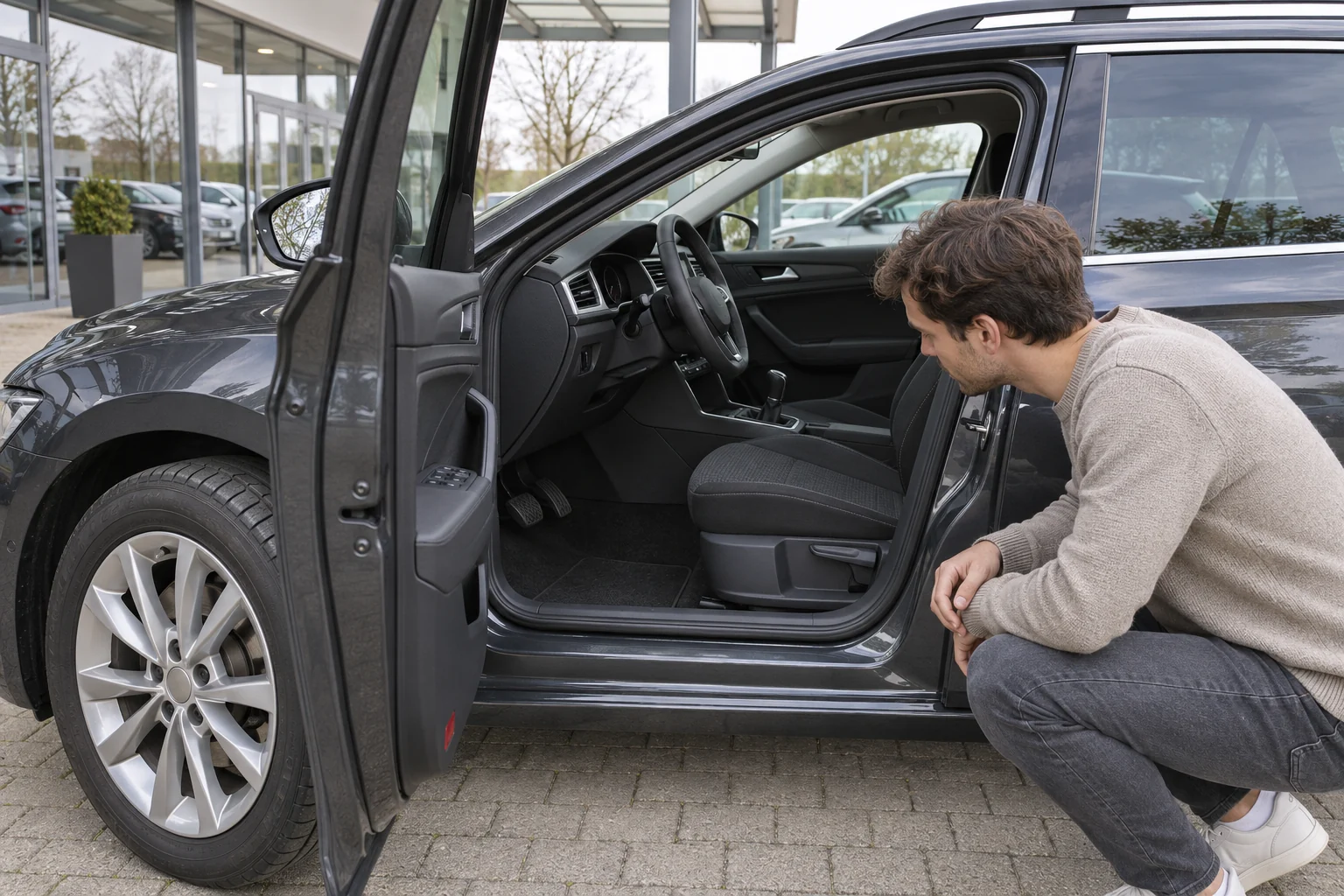
View the car in light that lets you see it clearly. Look at the door opening, the edge of the driver's seat, the boot sill, the wheels and the visible parts of the tyres. Record the areas you want the dealer to address. A scrape on a wheel might be a cosmetic issue you can live with. If the adjacent tyre looks unusual or the car feels unfamiliar on the test drive, ask for a professional assessment before committing. Keep what you observed separate from the dealer's explanation. A visible mark alone leaves the cause and the condition of concealed parts unresolved.
Use the test drive to try things that matter in your daily driving. Check whether you can manoeuvre comfortably, set the seat to suit you and operate the equipment you need. Agree on the test-drive arrangements with the dealer first. If you notice a sound or behaviour, record the circumstances and ask for it to be checked specifically. A short drive gives you observations from those conditions. It leaves the rest of the car's condition open.
Ask the dealer to identify known damage and repairs and show any supporting documents. If you receive an invoice, check that it belongs to the car first. It can describe the work billed. The current state of the repaired area may need its own assessment. If a material part of the story remains unclear, write down what evidence you would need before making an offer. The guide to used-car inspection costs in Germany explains what to ask about when comparing the scope and price of an independent check.
Put the handover commitments in writing
Sort each item you discussed into one of three groups. The dealer includes it in the price. You will arrange it yourself and have a firm quote. Or the cost, scope or responsibility still needs an answer. This helps when a general promise to get the car ready covers several jobs. Ask the dealer to itemise those jobs before you rely on the price.
For a promised wheel repair, ask which wheel is affected, what work the dealer is agreeing to, who will carry it out and what you can check at collection. If new tyres are included, record the agreed specification and quantity. Do the same for items such as a second key, a charging cable or an extra set of wheels. For questions about work that affects the vehicle's safe operation, ask a workshop that can assess the issue or do the work.
Ask for the final commitments in the purchase contract or an attachment clearly identified in it. Refer to the VIN and bring your saved quote to the signing. Check that the work and handover date are still described in the same way. Agreed characteristics are among the requirements set out in section 434 of the German Civil Code. Use descriptions you and the dealer can check against the actual car, such as which wheels come with it and the agreed condition at handover.
If something is missing or differs at collection, identify the exact point in the agreement and clarify what happens next before signing off on completion. A short checklist on your phone helps if each item refers to a specific commitment. Ask in advance how the dealer will document the work. The item on the paperwork, the agreed evidence of completion and what you can see on the car each answer a different question.
Check the remaining warranty for the VIN
Ask who provides the warranty, which terms apply and what start and end dates are recorded for this car. Ask about any mileage limit, servicing conditions and where you could make a claim. If the dealer mentions a manufacturer warranty and an additional dealer product, enter them separately. Compare the scope and time left from the expected handover date. Use the new car's written quote and applicable terms to collect the same facts for that option.
One manufacturer's terms show why a date in an advert gives you only part of the answer. Section A.3 of the Volkswagen new-car warranty terms for Germany, January 2026, gives the earlier of handover to the first purchaser and first registration as the starting point. It also describes specified delivery, registration or use events that can start the warranty. Use the terms that actually apply to your car and the start date confirmed for it. If you still need an answer, ask the provider or an appropriate partner to confirm it against the VIN. The PDF documents the example clause. Coverage for your vehicle depends on its own terms and records.
If the advert says the warranty runs until next year, ask for a date and the cover that applies until then. Two dates in the same month can fall on different sides of a trip you are planning. A mileage limit makes your expected driving relevant as well. Leave any unverified information open. If a particular type of cover matters to you, make confirmation a condition of your decision. Keep additional warranty cover separate from statutory rights. Section 443 of the German Civil Code describes a warranty as an additional commitment from its provider.
Calculate the known cash difference
Fictional example with two written quotes
For this entirely fictional example, you are buying a car in Germany. You compare two written quotes: €28,400 for the dealer demonstrator and €30,000 for the equivalent new car. Both cash prices include VAT and handover. Both cars have the equipment you need.
The demonstrator has a worn set of tyres that you would require replacing before use. An independent written replacement quote is €650.
| Tyre replacement agreement | Demonstrator comparison amount | Difference from new car |
|---|---|---|
| You pay for replacement | €28,400 + €650 = €29,050 | €950 |
| Replacement to an agreed specification included in writing at €28,400 | €28,400 | €1,600 |
In the second option, the vehicle price stays at €28,400. Leave the separate €650 quote out of that calculation. Have the agreed tyre specification and completion before handover recorded in writing. Recalculate from the revised written quote if the dealer changes the price or what is included.
The verbally promised wheel repair and remaining vehicle warranty are unresolved. Record both separately without assigning an invented amount.
A neutral question for the dealer:
Could you confirm in writing for this specific demonstrator what will be delivered for €28,400, whether replacement tyres to the agreed specification and the discussed wheel repair are included, the handover date, and the applicable vehicle warranty’s start and end dates?
The reply should clearly refer to the car being offered. A general statement such as “still under warranty” leaves the dates you need unanswered. Until written clarification arrives, the warranty remains an open point in your decision.
You need the car by a particular date. If the demonstrator can only be handed over later with all agreed work completed, that favours the new car, provided its timely handover is confirmed. The calculated difference remains €950 or €1,600, depending on the tyre agreement. Assess the timing requirement separately.
Start with the total price of the equivalent new car. Subtract the demonstrator's total price and any confirmed immediate cost you would have to pay for that car. If there is a confirmed and necessary extra cost on the new car as well, add it to that side. Keep finance, running costs and the value of earlier availability visible in separate lines. You should be able to explain every amount by pointing to a quote. Where the repair scope or cover remains unclear, keep the question beside the calculation and leave the value open.
Take one comparison worksheet to the dealer
Fill in the columns using your written quotes and the records you have seen. Add the date and the place in each document where you found the answer. Label any verbal statement as such. For a written commitment, record the wording or the reference to the contract attachment.
Take the latest worksheet with you when you collect the car. Go through the agreed items with the seller. Start with the vehicle identity and the odometer reading, then check the accessories and the evidence for any work promised. If completion of an important item is still unconfirmed, record what differs from the agreement and ask what the dealer can do about it and by when.
| Comparison item | Demonstrator | New car |
|---|---|---|
| Car and quote | VIN, quote reference and date. Does the quote identify the car you viewed? | VIN for a stock car, otherwise the quote reference and exact specification. |
| Required equipment | For each item, record the equipment list entry or what the dealer demonstrated on the car. | Check the same items in the written quote. Record any required packages and prices. |
| Total cash price | Cash price including VAT and agreed handover. Record mandatory items and any price conditions. | Cash price for the same scope. Get the delivery cost and quote validity in writing. |
| Prior use | First registration, kinds of use, last documented mileage and current odometer reading. | Ask if it is stock, previously registered or to be ordered. Check the details against the quote. |
| Immediate costs | List confirmed costs you will pay, with the quote. Record included work separately. | Record confirmed costs on the same basis. |
| Handover | Date, mileage, accessories and agreed dealer work with evidence of completion. | Compare the date, collection point and items supplied with the quote. |
| Remaining warranty | Provider, terms, vehicle-specific start and end dates, and any mileage limit. | Check the same information from the expected handover date. |
| Open items | Question, evidence you still need and the date by which you need the answer. | Use the same list for missing details such as delivery or equipment confirmation. |
The completed sheet gives you a short list of questions for the seller. Start with any answer that could change whether you buy. A usable reply identifies the car, the amount or work, who is responsible and when it will happen. If the handover scope still differs between quotes, ask for revised offers that include the same items. If an important question about condition remains open, wait until you can assess the response before committing.
A demonstrator that fits your needs may help when you have a firm date by which you need a car. A new car may suit you better if it has the required equipment, fits the same timetable and the adjusted cash difference is small. Use your worksheet to decide. You can leave the choice open while the delivery date or a necessary repair is unconfirmed.
Questions before buying a demonstrator
How much cheaper should a demonstrator be?
A fixed percentage gives you little to go on. Compare two total prices you can actually get for cars with the equipment you need. Include documented immediate costs and decide whether the remaining difference works for you given the confirmed handover date and known warranty cover.
How does it differ from a pre-registered car?
With a demonstrator, the way the dealer used that specific car is part of your decision. With a pre-registered car, ask about registration and use as well. If you have a specific offer, see the comparison of a pre-registered and a new Škoda Fabia.
Can the dealer keep using the car before handover?
Ask about planned use and get the handover mileage in writing if it matters to your decision. Have the dealer confirm the date and what comes with the car. Then you can compare these points with the agreement at collection.
Does first registration tell me how much warranty is left?
Get the applicable terms and confirmation tied to the VIN. Check the start, end, any mileage limit and relevant conditions. You can then work out what remains at your expected handover date.
When should I arrange an additional check?
Ask for a professional assessment when an unresolved condition or repair question could change your decision. Describe the area, the explanation you have received and the question you need the inspection to address. Record any questions the assessment leaves open.
Get help with a specific listing
Vehilo's independent car-buying advice can start with the listing. The First Look identifies visible strengths, missing evidence and questions to put to the seller. Already have a listing? Start with Vehilo's free First Look.