Buying advice · 12 min · By Vehilo ·
Buying an ex-lease car in Germany: 12 checks
An ex-lease car can suit you when its exact specification meets your daily needs, its history is traceable and its present condition matches the offer. Previous leasing alone answers none of those questions. What matters is what you can establish about this car before committing.

If you want to buy an ex-lease car in Germany, start with your requirements and then organise the records. A return report can provide useful information. First establish which vehicle was assessed, when and under what brief. An assessment for the lease return does not automatically answer every question about your later purchase.
Vehilo helps you assess choices and specific offers. These twelve checks take you from the right version through documents and inspection to the contract. The result is a reasoned next action: continue checking, request a particular answer or rule out a candidate.
1. Compare the car with your needs
2. Identify the exact specification
3. Establish the seller, ownership and release
4. Read the complete return report
5. Identify wear and damage correctly
6. Connect servicing and distance records
7. Clarify recalls for the individual car
8. Confirm equipment and accessories
9. Prepare the viewing and inspection
10. Compare the full purchase costs
11. Separate the contract, promises and guarantee
1. Compare the car with your needs
Write down which journeys the car must handle and what needs to fit at the same time. Include regular passengers, child seats, luggage, parking space and controls you want to use every day. Separate firm requirements from preferences you would consider compromising on.
Having come from a lease is not an everyday capability. It does not enlarge an inadequate boot or provide somewhere to charge. If an essential requirement remains unmet, investigate another version or model before spending time on individual signs of wear.
For an electric car, include a workable charging plan. Record charging locations, available parking time and an alternative. Then obtain evidence of the candidate's actual charging equipment. With any powertrain, ask whether it covers your usual journeys and less frequent but essential trips.
Also record when you need the car. An offer with release arrangements or necessary work still unresolved needs different planning from one with a confirmed handover date. Treat an announced date as something to confirm initially.
Our German-language guide E-Auto gebraucht kaufen: Passt es zu deinem Ladealltag? | Vehilo helps you work through charging locations and usable parking times.
2. Identify the exact specification
Note the model generation, body, engine or battery version, gearbox, drivetrain and build phase. Add the first registration and offered equipment. Only then can you see whether two adverts concern the same basic choice or involve several material differences at once.
A sporting equipment package and a different engine can answer different wishes. The model name alone therefore does not explain why you would pay more for this particular car. Our German guide C-Klasse kaufen: AMG Line, C43 oder C63 – was passt zu dir? | Vehilo explores this choice through specific C-Class directions.
Do not let the original list price drive the comparison either. What matters to you is the equipment present today, its usefulness and the condition offered. A function you will never use does not compensate for an unsuitable seating position.
Change only one major search direction at a time where possible. If you alter build phase, engine, body and equipment together, it becomes difficult to see which difference helps you. Keep the other requirements visible while comparing.
If you compare the ex-lease candidate with a recently registered car or a new order, separate the purchase routes first. Our German-language guide Fabia: Tageszulassung kaufen oder auf Neuwagen warten? | Vehilo explains that choice using the Fabia.
3. Establish the seller, ownership and release
Ask who is selling the car and what role your contact has. Will the contract name a dealer, leasing company or private individual? Is an intermediary or representative involved? The description “ex-lease” does not identify these roles.
Request an explanation where the contact, vehicle documents and contracting seller differ. Who is authorised to sell, who receives payment and who releases the original documents? Representation needs the appropriate authority. If release is still outstanding, you need to understand the intended process.
Section 433 BGB describes the seller's duties to deliver and transfer ownership. Do not turn past leasing into an unverified assumption about the present owner. The arrangements for the sale being offered are what matter.
If delivery of German registration certificate Part II is promised later, establish the timing and responsible organisation. Pause purchase preparation if nobody can clearly explain how the sale, payment and document handover fit together. The next step is confirmed responsibility, rather than a faster deposit.
4. Read the complete return report
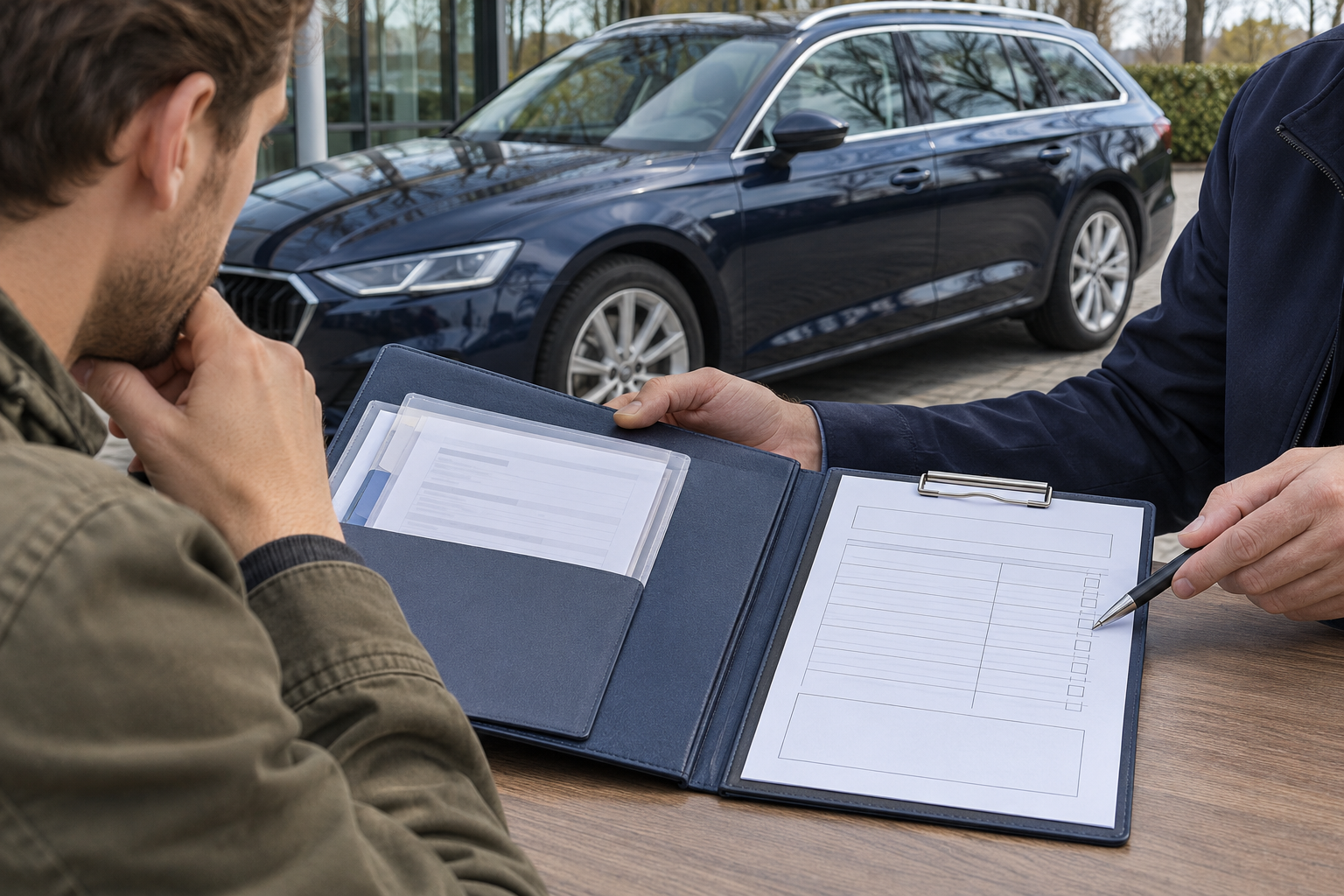
Request the complete report, including photographs, explanations and attachments relating to the offered car. Compare vehicle identification, date, odometer reading and the commissioning party. Read who assessed the vehicle and which inspection scope is stated.
The report should let you understand what was assessed. Does it concern the visible return condition, particular components or additional technical functions? Which areas were not examined? A title such as “expert report” does not answer those questions without its contents.
Three records with different purposes
| Record | Your question | Next comparison |
|---|---|---|
| Return report | What was recorded at return, and against which criteria? | Compare its entries with the car offered today |
| Repair evidence | What subsequent work is documented? | Match it to the affected entries in the report |
| Current condition assessment | Which present-day questions were actually examined? | Read the result, scope and remaining open points |
Notice whether an entry describes a finding, an assumption or an area not examined. If the report leaves something unresolved, carry it into your own question list as unresolved. Do not add a favourable assessment merely because no damage box is marked beside it. Ask the seller or issuing organisation to explain unclear abbreviations or grades before comparing two reports by their final amounts.
Ask what happened between return and sale. Was the car moved, used further, repaired or simply stored? The relevant answer needs to relate to this candidate. Do not carry the return condition forward unchanged when subsequent work or use has occurred.
5. Identify wear and damage correctly
Read the categories in the actual report. What does the assessor classify as an accepted used condition, damage or an unresolved technical concern? Do not import thresholds from another return catalogue. You need the criteria used in the document in front of you.
A mark accepted for the lease return may still bother you. Equally, a cosmetic finding does not have to end your interest in the car. Decide which differences you can live with and which require a specialist to establish their cause, extent or repair needs first.
An amount in the return report initially means what the report says it means. Establish whether it represents reduced value, an estimated repair amount or another charge. It does not automatically become your future workshop bill or entitle you to the same reduction in the purchase price.
For work after return, request the matching invoice or work description. Do the component, date and vehicle identification fit? A continuing concern needs a current assessment. A payment in the previous lease arrangement does not by itself prove that the corresponding work was performed.
6. Connect servicing and distance records
Place service entries, invoices, German HU roadworthiness reports and the return report in date order. For each, note the date, odometer reading and documented work. This shows which periods of use are described and where a follow-up question is needed.
A previous leasing agreement does not replace service evidence. Ask which work is specified for the exact version and which of it is documented. Do not transfer a service interval or gearbox maintenance requirement from a similarly named model.
Separate the displayed odometer reading from a promised total distance travelled. A consistent sequence of entries helps comparison, but does not independently prove the complete distance. A missing entry is not proof of manipulation either. Have the discrepancy explained and documented.
Also ask which work is due next. Establish whether it is included in the offer or becomes your expense after purchase. Outstanding work needs a relevant cost estimate for the actual car. “Everything done” replaces neither an itemised description nor supporting evidence.
7. Clarify recalls for the individual car
Use the German Federal Motor Transport Authority's recall database as a starting point for a specific question. A model name alone confirms neither that this car is affected nor that an action was completed. Ask the manufacturer or an appropriate authorised workshop about the individual vehicle identification number, or VIN.
Request information linked to the car and available records of completed work. The campaign, date and work should match. A general software entry does not automatically answer a question about a particular recall action.
Record an open campaign separately from ordinary servicing and any unrelated observed concern. Establish who will arrange the next appointment and which current manufacturer instructions apply to use of the car. “We will do it” needs a specific process before you base handover plans on it.
A completed recall then resolves that point. It does not also assess brakes, tyres, battery or the entire vehicle history. Continue to shape the remaining checks around the actual car's unanswered questions.
8. Confirm equipment and accessories
Request an equipment list linked to the vehicle and check the essential functions at the appointment. Use your actual needs as the reference: seat adjustment, assistance functions, towing equipment, charging hardware or the required usable seats.
A photograph or equipment name can narrow a search. Before deciding, establish what is fitted, what works and what is included in the sale. For later changes, ask for the relevant documents rather than treating the original equipment list as a complete description.
Count keys and included wheel sets. With an electrified car, put promised charging cables and their exact specification on the accessory list. Try important controls while parked. Ask how the installed digital functions can be used and which conditions apply.
For space, simultaneous use matters. Adjust the driver's seat first, fit a child seat if relevant and then load the luggage that regularly travels with you. Include your other usual passengers. A photograph of an empty boot does not show whether this combination works. If the seating position becomes impractical, seek another configuration instead of letting a long equipment list conceal the compromise.
If an essential feature remains unconfirmed, do not treat it as present already. Another question or a targeted function check is more useful than a longer list of minor extras.
9. Prepare the viewing and inspection
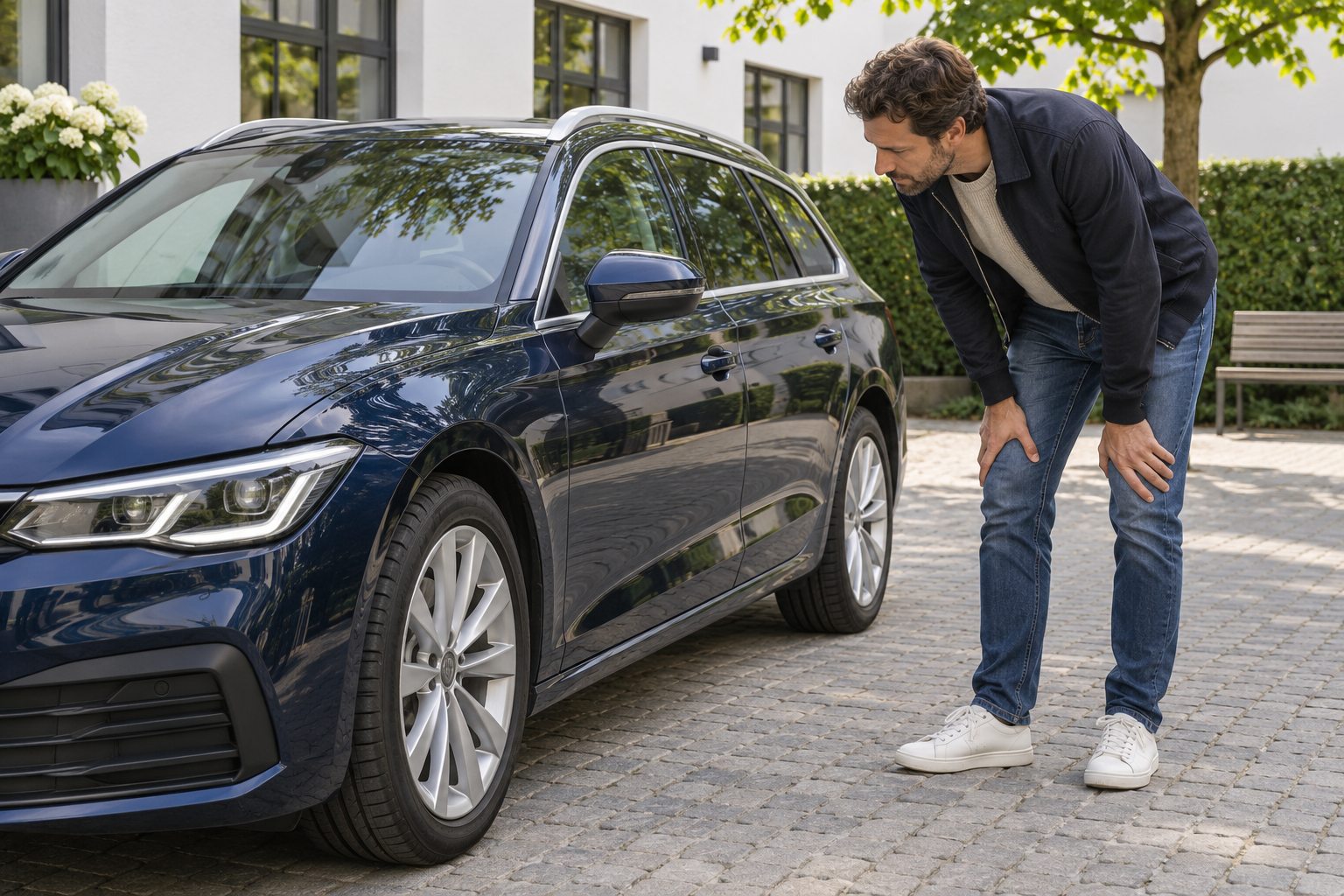
Take the report, invoices and open questions to the appointment. Start by identifying the vehicle, then examine the areas named in the report. Record new observations separately from points already documented.
Before a test drive, establish permission, insurance and the agreed conditions. Choose ordinary situations from your daily driving. Seat comfort, visibility, controls and manoeuvring matter alongside powertrain behaviour. A short drive does not answer the same question as a longer stretch when you regularly commute a substantial distance.
For unusual noises, warnings or contradictory repair information, prepare a specific brief for an independent professional inspection. Ask beforehand what its scope includes. An electric car's battery may require a separate question; an existing return report answers it only insofar as relevant findings are actually included.
If the necessary inspection cannot take place before your purchase decision, the question remains open. Decide deliberately whether to postpone the appointment or pursue another car. Do not infer the seller's intentions from this alone. The absence of information you need is sufficient for your decision. A promised later explanation cannot replace a finding you would need to rely on today.
Use the results to decide. Confirmation of the right specification can move a candidate forward. A documented but unresolved concern needs further assessment. Unsuitable comfort can end the search for that car even without a relevant technical finding.
10. Compare the full purchase costs
Compare the full purchase price and expenses needed before use. Depending on the offer, these include delivery or collection, registration, required wheels, an agreed inspection and work already identified as necessary. Keep an untouched reserve separate from expenses you actually expect.
Compare similar versions on the same basis where possible. If one offer includes wheels or work and the other does not, keep that difference visible. A low monthly payment does not settle the cost question either. With finance, include the deposit, instalments, final payment and any other agreed costs in the same comparison.
Do not invent an amount for an unknown repair. Record the question, required finding and then the relevant cost estimate. Otherwise, an apparently precise total may depend on an unresolved technical assumption.
Previous leasing does not establish a general price advantage. What matters is whether this offer, its evidenced condition and its equipment fit your limit. If necessary expenses exceed that limit, compare another candidate or reconsider an optional equipment preference.
11. Separate the contract, promises and guarantee
Compare the contract with the advert, return report and subsequent repair records. Are the vehicle, seller, price and accessories clear? Which known damage remains? What work will be done before handover and what evidence will be supplied?
When a consumer buys from a business outside an auction, the consumer-goods rules under section 474 BGB apply. Protected defect rights cannot simply be excluded in advance without regard to those rules. Under section 476 BGB, shortening the limitation period for used goods to at least one year requires specific advance information and an express, separate agreement. Calling the car “used” does not itself shorten a period.
The special evidential presumption in section 477(1) BGB generally concerns a non-conforming condition appearing within one year of risk passing to the buyer, subject to statutory exceptions. It does not promise future durability. The actual seller's role and contract therefore remain important.
Read any additional advertised guarantee separately. Who provides it, which components and services does it cover, what duration or distance limit applies and which conditions must you meet? Do not infer a manufacturer's guarantee or its continuing validity from previous leasing. Request the terms applicable to the vehicle.
12. Resolve handover and outstanding decisions
Agree on payment, original documents, keys and handover in advance. At collection, compare the car with the condition you viewed, check promised work and record the date, time and displayed odometer reading. Acknowledge only items, documents and payments actually received.
Plan registration, insurance and the journey home around the actual handover status. A keeper change involves the duties under section 15(5) FZV. Establish the process with the responsible German authority and insurer before relying on driving home immediately.
Which answer changes your next step?
| Candidate status | Your action |
|---|---|
| Needs met, records matched, inspection questions resolved | Prepare the contract and handover on that basis |
| Suitable version, but material evidence is missing | Request that particular record or the appropriate inspection |
| An essential requirement is demonstrably unmet | Pursue other candidates |
| Authority to sell or material contradictions remain unresolved | Pause the commitment and payment |
If you are starting with a specific advert, Vehilo's free First Look can organise visible details, missing evidence and seller questions. Include your actual requirements. The next step can then follow your purchase needs and the information available.
Questions about buying an ex-lease car
Is an ex-lease car always cheaper?
Its origin does not establish that. Compare the exact version, documented condition, included accessories and remaining necessary expenses. That comparison shows whether the offer fits your budget and needs.
Is the return report enough for my decision?
Only for questions its actual contents answer. The date, vehicle identification and scope need to fit. Changes since return and unexamined areas need additional evidence or an appropriate inspection.
Are leased cars always fully serviced?
Treat this as a question for the individual car's records. Put service entries and invoices in date and distance order. A general statement about the previous contract does not replace documented work.
Can I accept visible signs of use?
You can decide which cosmetic marks bother you. An unclear cause, possible further damage or a technical concern needs suitable assessment first. The return report's category does not decide your acceptance on its own.
What if an important document is missing?
Identify the statement it should support. Ask for suitable alternative evidence or an inspection. Pause the purchase if a material question stays unanswered. A detail irrelevant to your decision does not need to become an automatic reason for rejection.