Electric cars · 7 min · By Vehilo ·
BMW i3 94 or 120 Ah: which battery fits your routine?
A driver who can charge at home every evening has a different requirement from someone who relies on a public charger every few days. Start with the distance between dependable charging stops, then check the capacity of the actual used car. A historical factory figure cannot establish its battery condition today.
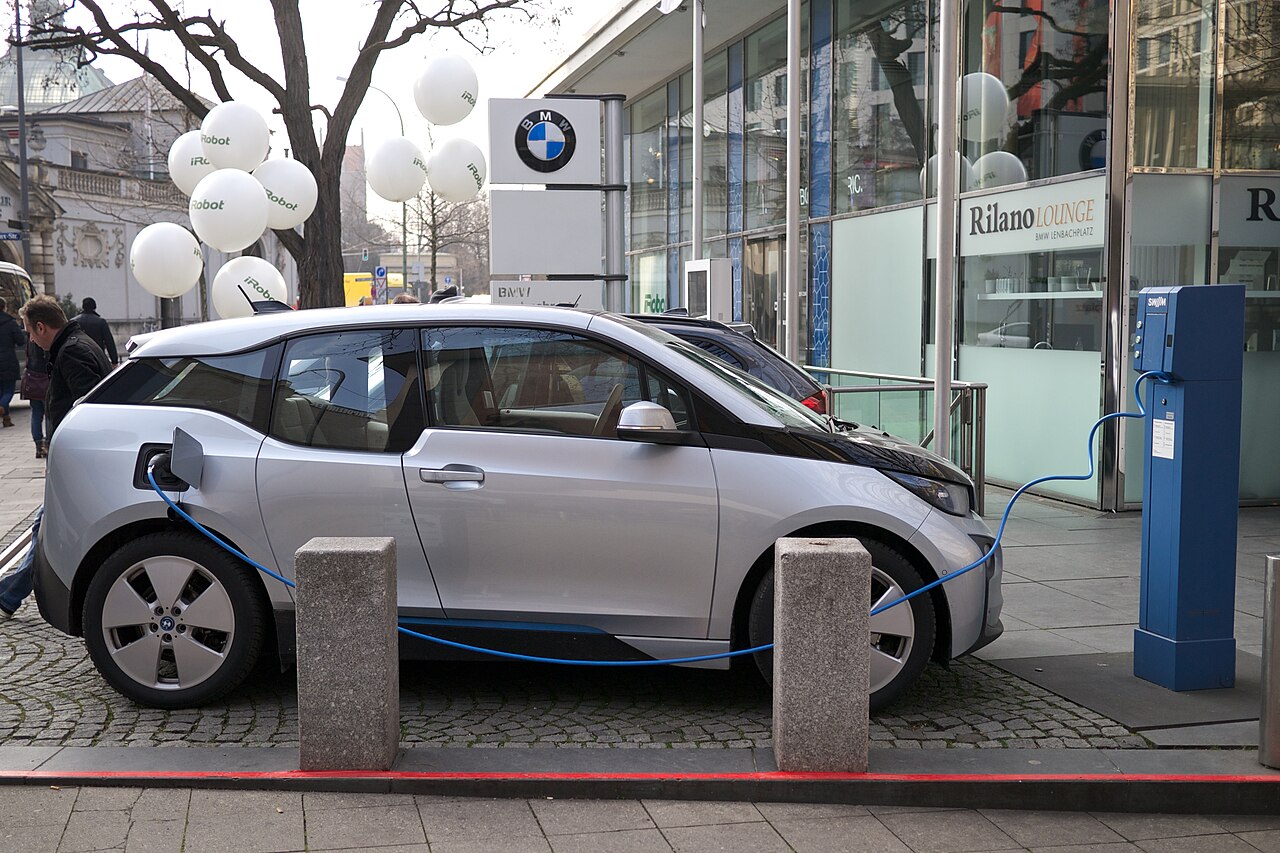
Photo: Kārlis Dambrāns / Janitors · CC BY 2.0.
What the larger battery adds
This comparison covers the pure electric base i3 with 125 kW (170 PS). It excludes the i3s and Range Extender versions. BMW’s historical figures give 27.2 kWh usable capacity for the 94 Ah model and 37.9 kWh for the 120 Ah model: a difference of 10.7 kWh. The 120 Ah battery has 42.2 kWh gross capacity; gross and usable capacity are different measures. Both compared base versions have the same quoted motor output.
Manufacturer context for the older battery: BMW 94 Ah announcement
Manufacturer specification for the larger battery: BMW 120 Ah announcement
These figures describe the cars when new. They do not measure an advertised used example. Treat a battery report as evidence only when its date, method and reference capacity are clear.
Count the journeys between charging stops
Write down every journey between charges, including shopping, sport, detours and extra trips. A reliable home or workplace charger makes this interval easier to plan. With public charging, check whether the charger is normally available when you need it and whether the parking time is long enough to replace the energy used. A nearby charger alone does not answer those questions.
Two days of driving, one charge
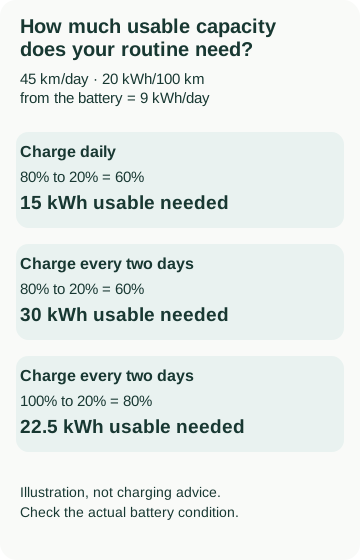
In this fictional example you drive 45 km per day and use 20 kWh/100 km from the battery, excluding charging losses. That uses 9 kWh per day or 18 kWh over two days. Suppose you leave at 80% and want to arrive with 20% remaining. The simplified usable window is 60%, so supplying 18 kWh requires 30 kWh of current total usable battery capacity: 18 ÷ 0.60.
That is above the 94 Ah model’s historical 27.2 kWh usable figure. The 120 Ah figure of 37.9 kWh is higher, but the actual used battery still needs evidence. Changing the routine changes the requirement: daily charging needs 9 ÷ 0.60 = 15 kWh; charging every two days from 100% down to 20% needs 18 ÷ 0.80 = 22.5 kWh.
These are capacity requirements for the stated assumptions, not measured range or general charging instructions. The percentage display is simplified as proportional to usable energy. Leave room for higher consumption and extra trips rather than planning exactly to the calculated limit.
Evidence to request for the used car
Use consumption from the battery for this calculation. Electricity bought at the charger also includes charging losses. The distinction is explained in the ADAC BMW i3 review
Ask for any battery test report and its date, method and baseline. A state-of-health percentage without a defined original usable capacity does not reliably convert to the kWh needed here. Check the actual charging sockets and fitted equipment too. A larger battery does not automatically mean faster charging at your chosen charger.
When the 120 Ah version deserves a closer look
The larger battery is more interesting if you regularly need several days between charges or expect extra journeys. Daily charging and shorter trips may leave the 94 Ah version suitable, provided its actual capacity and condition support your routine. Compare year, mileage, equipment, condition and upcoming work alongside the battery. A price difference between two cars is not automatically the battery premium, and these capacity figures do not establish a fair premium in euros.
For help translating your needs and budget into a written search plan and seller questions, see Vehilo car search support
Sources checked on 3 November 2026. This is a document-based guide with an original calculation, prepared with AI assistance. Vehilo did not drive or measure a vehicle for it.