Buying advice · 13 min · By Vehilo ·
Check a used car for accident damage in Germany
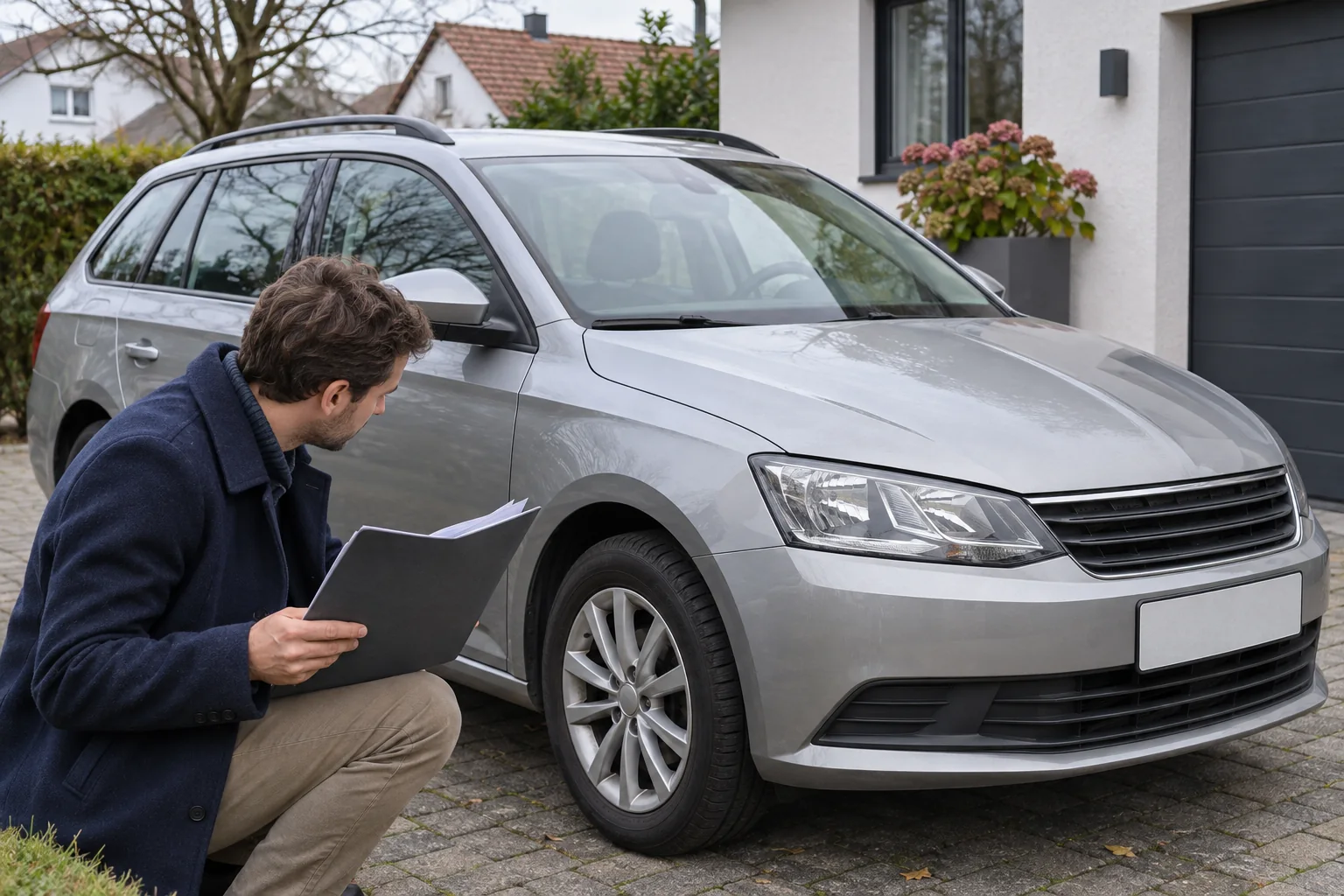
The advert says “unfallfrei”, or accident-free. At the viewing, the right front wing looks a different shade. What should you ask, and what answer would be enough for you to make an offer? To check a used car for accident damage in Germany, start by recording exactly what the seller says. Match the paperwork to the car and see whether it accounts for what you can see. If a question about an important part remains open, take that question to an independent inspection centre before you commit.
Vehilo’s independent car-buying advice helps you assess an offer and prepare your next questions. For your own preliminary checks, start with a few notes. For each point, write down where it came from, what it supports and what you still need to find out. That gives you the same questions to take into a second conversation, even after you have left the viewing.
Record what the seller says
Save the date and wording of the advert. Ask a question the seller can answer with a period of time and a part of the car: “What damage, repairs or paintwork do you know about on this car? Where was it, and when did it happen?” A reply such as “the left rear corner of the bumper was repainted” gives you a location and a piece of work. “The car has always been fine” leaves you guessing what the statement is based on.
If the car had previous owners, ask about the period before the current seller bought it. Do they have records, a statement from the previous owner or no information about that time? The 2025 ADAC model contract for private car sales treats the seller’s period of ownership separately from earlier periods, which the seller describes to the extent they know about them. That distinction is useful in conversation too. It helps you see which part of the history the seller can speak about from direct experience.
For any damage the seller mentions, ask about the cause and the work separately. Was something painted, repaired or replaced? Who commissioned the work? Were there several incidents in the same area? If the seller mentions damage while parking, ask for the approximate date and the parts affected. When you read the invoice, you can then see which line goes with which explanation. If there were several repairs, give each one its own entry in your notes.
Before you travel, ask for a readable copy of the relevant page if you have an unresolved question. Names and addresses can be covered. Leave enough visible to identify the vehicle, the date, the work and any continuation page you need for the question. If the seller prefers to show the papers in person, ask which ones they will bring. For a longer journey, that can help you decide whether the viewing is worth the trip with the information available so far.
Match the records to the car
Lay out the advert, the written reply, the repair order and the invoice. At the viewing, compare the vehicle identification number, or VIN, on the car with the registration papers. If an invoice lacks the full VIN, ask for a reliable link to the car, such as the associated order showing the VIN. An invoice for the same make and model can help with this purchase only once you can match it to the specific car on offer.
Sort the documents by date. A photo of a damaged part shows what is visible in the frame. A quote describes work that was proposed. A final invoice lists the work charged for. An inspection report describes the condition within the scope of the checks at that date. Which of those questions does the document in front of you answer? If all you have is a quote, ask whether the work went ahead and which items were carried out.
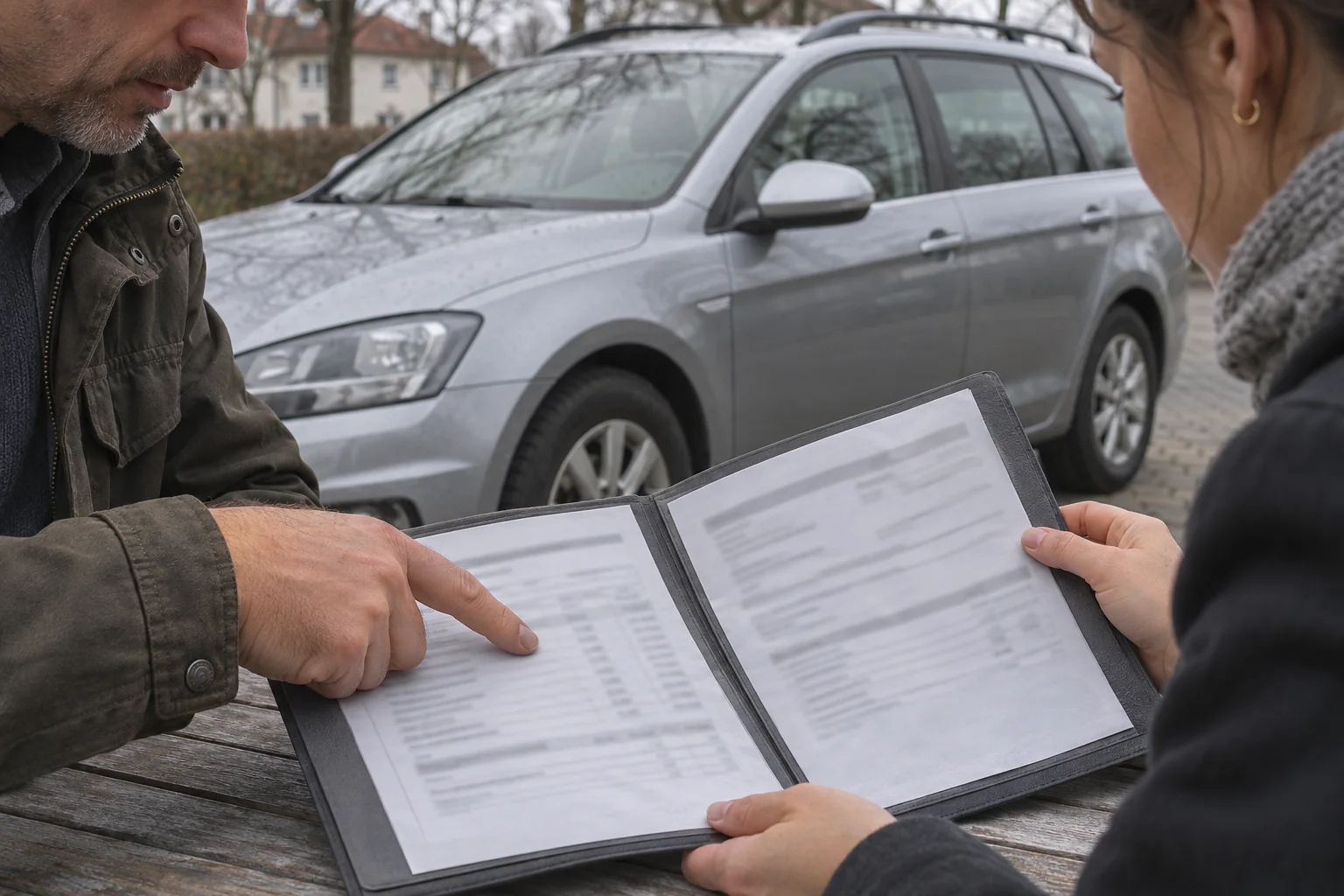
Read the entries one at a time. Which side is listed? Is there a replacement part, or does the invoice list labour on that part? Does the invoice refer to a measurement report, and is the report actually attached? The total helps you understand what the work cost. To establish what was billed, you need the individual entries and any relevant attachments. If the invoice refers to a separate sheet, ask for that sheet by name.
Write down any discrepancies side by side. For example, the seller’s message says “left” while the repair order says “right”. Ask first whether the two refer to the same incident. There may have been separate jobs, or the seller may have meant another part of the car. Record any corrected account alongside the matching invoice. If you still cannot connect the two after asking, leave the point open. An otherwise tidy service record answers this particular question only if it contains a document that explains the repair you are asking about.
Worked example: was it just the bumper?
This example is entirely fictional. It concerns a used-car buying decision in Germany.
Before making an offer, you ask about previous damage. The seller says only the front bumper was repainted. You then receive a repair invoice that matches the car being offered.
The invoice lists replacement of the right front wing, work on the right front door and a wheel-alignment check. It records the work billed. These entries alone do not establish its cause, repair quality or present condition.
You record the gap: the seller’s first account does not explain the additional items. The precise work on the door and whether all items had the same cause remain unclear. These questions need resolving before your offer.
A neutral message could read:
You mentioned repainting the front bumper. The invoice also lists a wing replacement, door work and a wheel-alignment check. Could you explain the reasons for each item and the repair scope? Do you have the repair order or photographs from before and during the work?
Ask the seller to expand their account. Then match each invoice item with the explanation and any supporting record. Keep unsupported statements identifiable. A repair order can describe the work commissioned. Photographs can show the documented state before or during the work.
For the wheel-alignment check, ask for the associated report and the recorded reason. That report also relates to the work at that time. It does not establish the car’s condition today.
For present condition, request a targeted professional inspection. Ask: What findings are visible at the right front wing, right front door and accessible adjoining areas? Do they fit the documented repair scope, and which questions need further examination? Ask for the inspection’s limitations to be recorded in the report.
If the records and the seller’s expanded account still conflict, or the targeted inspection is declined, hold off making an offer. Record the unanswered question and missing evidence. If the material gap cannot be resolved, compare other cars. A price proposal would leave that uncertainty unchanged.
Describe what you can see
Look at the car in daylight. If the bodywork is wet or very dirty, ask for another appointment or a spot where you can see the area clearly.
Start with the area you have already discussed. If the concern is at the front right, look at the joins between the wing, bonnet, headlight and door. Compare equivalent points on the left and right from similar angles. If the gap at the door seems to widen towards the bottom, write down exactly that. If a colour difference only stands out in a photo, see whether you can spot it in person from more than one angle. Then ask whether there is a known repair or record for that exact area.
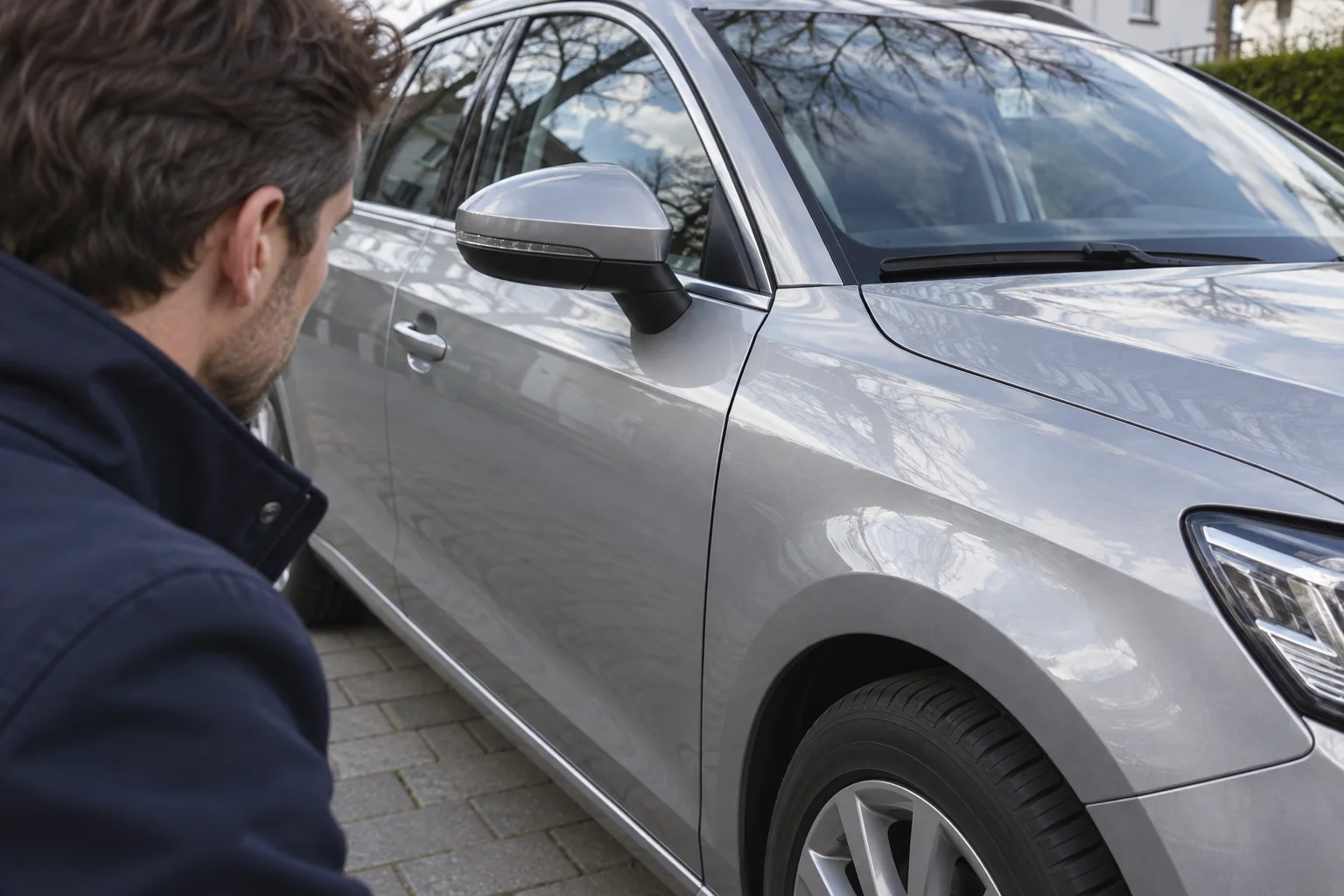
Leave the diagnosis to a professional. A difference in colour can be consistent with earlier paintwork. Colour alone cannot tell you why it was done. If you want the paint thickness measured, ask the inspector which materials their gauge can measure and which points they use for comparison. Ask them to show you any unusual readings on the car. For the purchase decision, you need their assessment of that area alongside the invoice and other findings. A single reading tells you little about the rest of the vehicle.
Ask before taking photographs. A wider photo and a close-up without visible personal details can help you find the same point later. Frame the shots so it is clear which side you mean. If light, access or dirt prevents you from seeing a section, make a note of that too. You can then tell which parts your preliminary look actually covered. The used-car viewing checklist for Germany covers the other points to look at during a viewing.
Agree on a specific inspection
If the conversation and the paperwork leave a material question open, describe it before you book. “The seller mentioned a repainted bumper. The invoice lists other work at the front right. Can you look at the documented areas and tell me whether you can see signs of other work there? What would remain outside the inspection I’m booking?” Share the records the inspection centre needs, with the seller’s permission if they supplied them.
Discuss which areas the inspector needs to access and what checks the quote includes. Depending on the question, they may suggest looking at adjacent bodywork, mounting points or accessible parts of the underside. Ask whether your question calls for a lift or a separate measurement, who can provide it and whether the seller agrees to the appointment. Have the centre explain the work in relation to your specific question. Before you book, you can then judge whether the proposed inspection will help with your decision.
Ask for written findings that list the areas checked and the date. The report should make clear if a point was inaccessible or a measurement fell outside the agreed scope. When you read it, ask which findings fit the invoice and what remains uncertain. A professional view of the visible condition today may give you enough to decide how you feel about a particular repair. The car’s earlier history can only be traced as far as the available records let you follow it.
Arrange the appointment before you pay a deposit or agree to buy. If the seller cannot bring the car to the proposed centre, ask whether there is an option that works for both of you and still gives access to the same areas. If the necessary access is still unavailable or the inspection is too general, keep the decision open. The guide to used-car inspection costs and scope in Germany explains how to compare quotes.
Decide before making an offer
Write down four things for each area that matters. Start with the statement you want to check. Add the matching document or your observation. In one sentence, say what is still open. Then decide what answer or finding would be enough for you to pursue the purchase. You can discuss those points with the seller or inspection centre without trying to guess what caused the damage.
| Statement or item | Evidence available | Open question | Next step |
|---|---|---|---|
| Front bumper repaint | The seller’s first account | What prompted the work, and which order covers it? | Ask for the date and matching repair order. |
| Wing replacement and right front door work | Invoice matched to the car | What was ordered for the door, and do both items relate to the same incident? | Ask for the repair order or photographs of the work. |
| Wheel-alignment check | Line item on the invoice | Why was it carried out, and what does the report from that time say? | Ask for the report. Arrange a focused check if a question about today’s condition remains. |
- Keep negotiating: The account names the parts involved, the records match the vehicle and you have resolved the important question about its current condition. Note which work is documented and what you are basing your decision on.
- Wait for more information: The account is plausible, but an important attachment is missing or an area was inaccessible. Ask for the specific record or book a suitable inspection. Return to the decision once you have the result in front of you.
- Walk away: A discrepancy involving an important area remains unresolved, or you cannot arrange the inspection before committing. You can leave the offer even if the seller is willing to reduce the price.
Before you discuss price, ask what a discount would solve for you. With a documented cosmetic repair, you can decide how much the visible condition matters to you. If you still do not know which parts were affected or what needs checking, a lower price leaves that gap open. Keep the price conversation and the question about condition separate. If you need the car every day and have little time to arrange further work, that uncertainty may matter more to you than it would for a second car.
If the records fit and you want to proceed, take the agreed description of the repair into the purchase conversation. Refer to the matching invoice and its date, and to any open points that still matter to you. You can find the same entries again at the next appointment. Keep separate notes if you are looking at several cars. Two otherwise similar offers can differ in how much of the seller’s account you can actually support with records.
Already have a listing? With the free First Look for your listing, you get a short assessment of what is visible, what evidence is missing and what to ask the seller. If you would like help with a later decision, the independent car-buying advice page shows the options for each stage of the purchase.
Frequently asked questions
Can I spot accident damage in listing photos?
Photos can help you find a point to ask about. Compare several views and, if needed, ask for a photo of the same area in daylight. The reason for a difference in colour and the condition beneath the surface remain open. Use the seller’s answer to decide which document or inspection would help next.
What does an empty vehicle history report tell me?
The report shows what the provider found about that car in its sources. If there is no damage entry, check the provider’s coverage and note any periods for which you have no evidence. A matching repair invoice or a focused check of a visible area may still be needed to answer the question you have about the car.
Is a valid German roadworthiness inspection enough?
Annex VIIIa of Germany’s StVZO sets out what the periodic roadworthiness inspection, or HU, covers. It includes the condition of the frame and body. Check which vehicle the report covers, when it was issued and what it records. For a specific earlier repair, ask for the repair record. If you still have a question about the condition of that area today, ask for a targeted inspection.
Should I walk away from a car with any repainted areas?
Start by asking where the paintwork was done, why it was needed and what other work went with it. If you understand the documented work, you can assess the visible condition in your own time. When the invoice lists more areas and the explanation leaves them open, clarify the scope before you offer.
What if the seller did not commission the repair?
Ask what the previous owner told them and what paperwork they were given. Ask them to say where their information came from. If they have no information about a period before they owned the car, keep it open and decide whether an independent inspection could resolve enough of your questions to proceed.